Since 1 July 2026, stricter requirements regarding Listeria monocytogenes in certain ready-to-eat foods have applied in the EU. Switzerland has also incorporated the corresponding regulation into the Swiss Hygiene Ordinance (HyV; SR 817.024.1).
This issue is also relevant for restaurants, hotels, caterers, and institutional food service operations—especially when ready-to-eat meals are purchased, prepared, stored under refrigeration, and served to guests at a later time.
Why is Listeria particularly relevant to the food service industry?
Listeria monocytogenes is a pathogenic bacterium that is widespread in the environment. One thing that sets it apart from many other pathogens is that Listeria can multiply even at refrigerator temperatures.
The longer a ready-to-eat food product is stored under refrigeration, the more important it is to maintain strict hygiene standards, ensure sufficiently low storage temperatures, and establish a reasonable shelf life.
Those at particularly high risk of listeriosis include older adults, pregnant women, and people with weakened immune systems. This is of great importance, for example, for hospitals, retirement and nursing homes, and other facilities that care for particularly vulnerable groups.
What has changed since July 1, 2026?
The new regulations apply in particular to ready-to-eat foods able to support the growth of Listeria monocytogenes.
Until now, the particularly strict criterion—”Listeria monocytogenes not detectable in 25 g”—applied primarily before the product left immediate control of the producing food business operator.
As of July 1, 2026, this criterion generally applies throughout the entire shelf life of the food product placed on the market.
An exception may be granted if the food business can demonstrate to the competent enforcement authority that a level of 100 CFU/g is not exceeded throughout the entire shelf life.
Which foods in the restaurant industry might be affected?
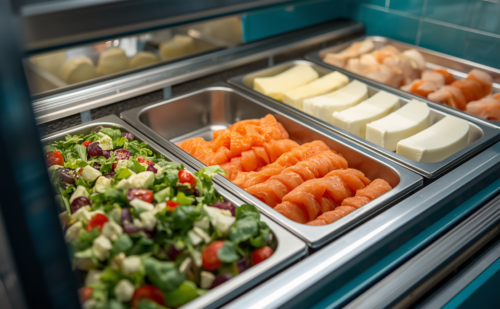
Of particular relevance are ready-to-eat, perishable foods that are not reheated after preparation and are kept refrigerated for a certain period of time.
These may include, for example:
- Pre-prepared salads and deli salads
- Sandwiches and filled rolls
- Cold meat and fish dishes
- Smoked fish and related appetizers
- Soft cheese and other ready-to-eat dairy products
- Prepared desserts and other chilled dishes
- Food that has been cooked and then chilled, and is served without being reheated
- Products/meals prepared in-house with a shelf life of several days
Not every food automatically poses the same risk. Key factors include composition, pH, water activity, temperature, and storage duration.
What does that mean, specifically, for a restaurant?
For a traditional restaurant, this change does not automatically mean that laboratory analyses or extensive shelf-life studies are now required for every dish prepared.
However, the new requirements underscore just how important a well-functioning hygiene and self-monitoring plan is, especially for refrigerated and ready-to-eat foods.
The following points should be given special attention:
1. Determine the shelf life with due care
Homemade ready-to-eat meals should not be stored for longer than necessary.
The longer food is stored, the more time any Listeria present has to multiply, even in the refrigerator.
Particularly when storing products for several days, an assessment should be made as to whether the specified shelf life is scientifically justified.
2. Strictly maintain the cold chain
Keeping the cooling temperature as low and constant as possible reduces the growth of microorganisms.
Refrigeration units should therefore be inspected regularly, and temperatures should be documented in accordance with the company’s self-monitoring plan.
3. Prevent cross-contamination after heating
Contamination following a cooking or heating step is particularly critical.
Food that has already been heated can become recontaminated with Listeria through, for example, hands, cutting boards, knives, machines, containers, or dirty work surfaces.
Areas where ready-to-eat foods are handled therefore deserve special attention.
4. Don’t forget to clean hard-to-reach areas
Listeria can survive for long periods of time, especially in damp areas.
Some examples of potential problems include:
- Refrigerators and Cold Rooms
- Gaskets
- Drains
- Cutting Equipment
- Machine parts that are difficult to access
- Joints and Transitions
- Reusable containers
Cleaning and disinfection plans should explicitly take such areas into account.
5. Include advance preparation in the HACCP plan
Anyone who prepares food several hours or days in advance should consider the entire process—from cooking or preparation through cooling to storage and serving.
Particular attention should be paid to rapid cooling, the cooling temperature, hygienic storage, and a clearly defined internal time limit for use.
6. Include suppliers and incoming-goods controls
Not all Listeria risks originate within one’s own facility. Ready-to-eat foods, in particular, may have already been produced, sliced, portioned, or packaged at the supplier’s facility.
Food service establishments should therefore also include their suppliers and the receipt of goods in their risk assessment.
The following are particularly important:
- Purchasing food from reliable and suitable suppliers
- Inspection of cooling temperature, packaging, and condition upon receipt of goods
- Compliance with Use-By and best-before dates
- Proper storage immediately upon delivery
- Ensuring Traceability
- Consistent action on product recalls and safety notices
In the case of particularly high-risk ready-to-eat foods or when providing meals for vulnerable groups, it may also be advisable to clarify with the supplier how the product’s shelf life and microbiological safety have been ensured.
It is important to note that even if a product is delivered ready-to-eat, the food service establishment remains responsible for its proper storage, handling, and serving.
7. Take special care to accommodate particularly vulnerable consumers
Facilities that provide meals to older, sick, or immunocompromised individuals should assess the risk of listeriosis with particular rigor.
This applies, for example, to retirement and nursing homes, hospitals, and other institutional food service facilities.
The target audience should also be taken into account when selecting ready-to-eat foods to purchase and when determining internal shelf lives.
Are food service establishments now required to have their food tested for Listeria?
Not every food service establishment is automatically required under the new regulation to have all its food tested regularly for Listeria monocytogenes.
Whether microbiological testing is advisable or required depends on the facility, the food products manufactured, the processes involved, the shelf life, and the risk assessment conducted as part of the self-monitoring program.
However, anyone who produces ready-to-eat foods with a longer shelf life or supplies particularly vulnerable groups should carefully assess whether additional testing or a professional evaluation of the shelf life is necessary.
What Should You Do in the Event of a Product Recall?
Listeria, in particular, is a frequent cause of recalls of ready-to-eat foods.
A restaurant business should therefore be able to track the following at all times:
- from which supplier an affected product was purchased
- whether there is still affected product/stock on the premises
- whether the product has already been processed
- in which dishes it was used
- whether further measures may be necessary
Effective traceability is therefore an important component of the establishment’s self-control system.
Conclusion
The stricter Listeria regulations, which have been in effect since July 1, 2026, make one thing particularly clear:
For ready-to-eat foods, proper refrigeration alone is not enough.
Short and clearly defined shelf lives, a well-functioning cold chain, carefully selected suppliers, consistent staff and facility hygiene, and the prevention of cross-contamination are crucial.
Especially when it comes to pre-prepared foods that have been stored refrigerated for several days, it is worth taking another critical look at existing processes and the HACCP/self-monitoring plan.